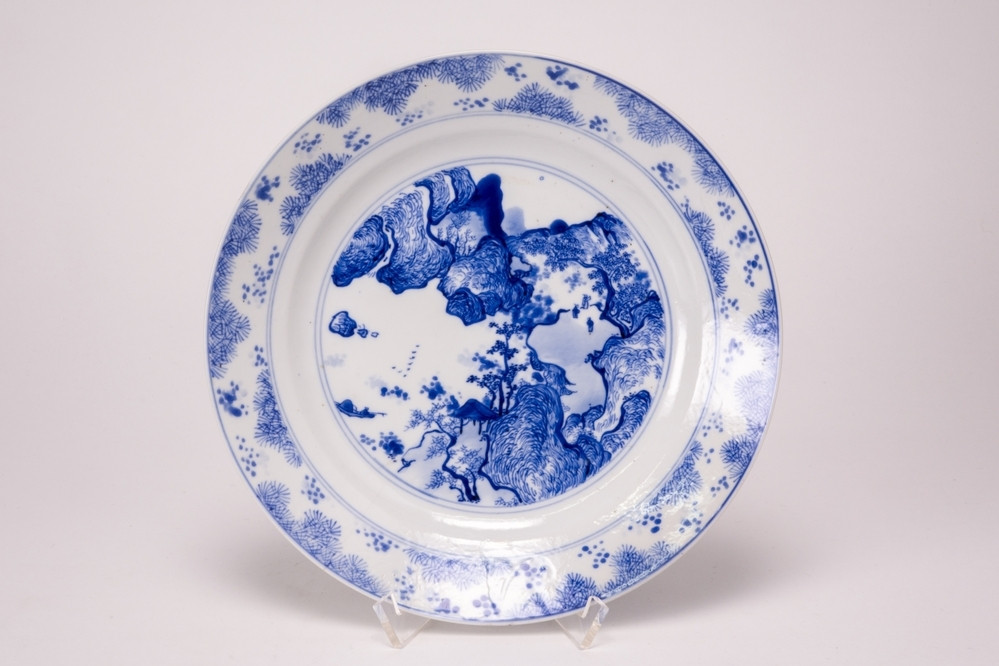
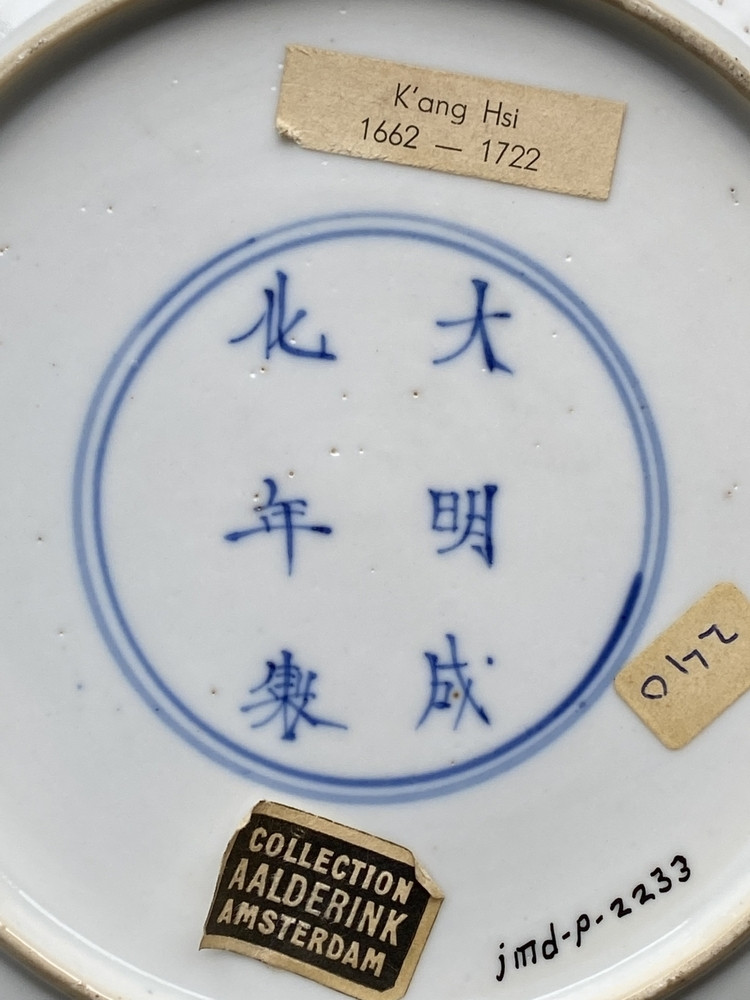
Bord op voetring, platte rand. Versierd in onderglazuur blauw met een berglandschap met een rivier en bomen. Op een plateau rechts drie minuscule figuurtjes, een vissersboot op het water, een afdak op palen op de oever. Op de rand een patroon van groepen pijnboomnaalden en stippen. Op de achterkant twee maal een gestyleerd rivierlandschap met bergen. Onder op de bodem het zes-karakter merk Chenghua in een dubbele cirkel. Het landschap is geschilderd in de stijl van ‘the master of the rocks’(zie cat. 51{}), waarbij korte, elkaar overlappende boogjes gebruikt worden. Het geheel maakt daardoor een complexe indruk. De menselijke elementen (de drie figuurtjes, de boot, het afdak) vallen in het niet bij de overweldigende natuur, een weergave die in de Chinese landschapsschilderkunst een eerbiedwaardige traditie kent en in deze tijd een revival beleefde. De stippen op de rand zijn kenmerkend voor het laat 17e-eeuwse Kangxi porselein. Dergelijke bordjes zijn niet zeldzaam en werden ook naar het Westen verscheept.
Meer informatie
Bord
17e eeuw
Collectie
Jan Menze van Diepen Stichting
Beschrijving
Details
Merk
Hall mark op de onderzijde. Ch'êng Hua. <br/ >
Datering
17e eeuw
Materiaal/techniek
gebakken
keramiek
Inventarisnummer
JMD-P-2233
Objectsoort