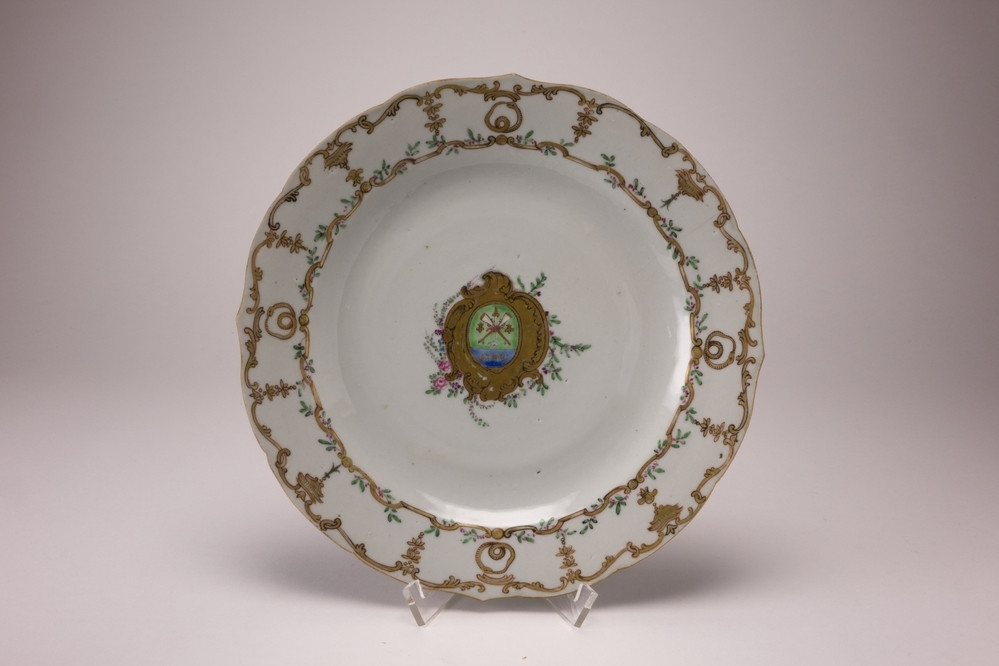
Bord op voetring, platte, geschulpte rand. Versierd in emailkleuren. Op het plat een wapen in een exuberante, rocaille-vormige cartouche die omgeven wordt door een in zijn staart bijtende slang. Het wapen bestaat uit twee gekruiste musketten en een rechtopstaande zwaard of floret met daarboven de letters ABCD. Op de rand onder en boven guirlandes en in elkaar hakende ranken met daartussen afhangende ornamenten, Franse lelies en vier in hun staart bijtende slangen. Een eerste vorm van chine de commande was porselein dat met een familiewapen versierd was. In de 18e eeuw was Chinees wapenporselein zeer populair in Europa en als men over de goede connecties beschikte gaf men opdracht om eet- en theeserviezen te bestellen met het eigen familiewapen. Deze heraldische en geregistreerde wapens zijn meestal wel te identificeren, maar lastiger is het met fantasiewapens van partikulieren, genootschappen, societeiten en dergelijke. Gezien de letters ABCD en de gekruiste musketten lijkt dit geen familiewapen te zijn, maar mogelijk het embleem van een genootschap of weerbaarheidsvereniging. In de collectie Van Diepen zijn geen stukken met 'gewone' familiewapens aanwezig.
Meer informatie
Bord
18e eeuw
Collectie
Jan Menze van Diepen Stichting
Beschrijving
Details
Merk
ABCD <br/ >
Datering
18e eeuw
Materiaal/techniek
gebakken
keramiek
Inventarisnummer
JMD-P-1702
Objectsoort