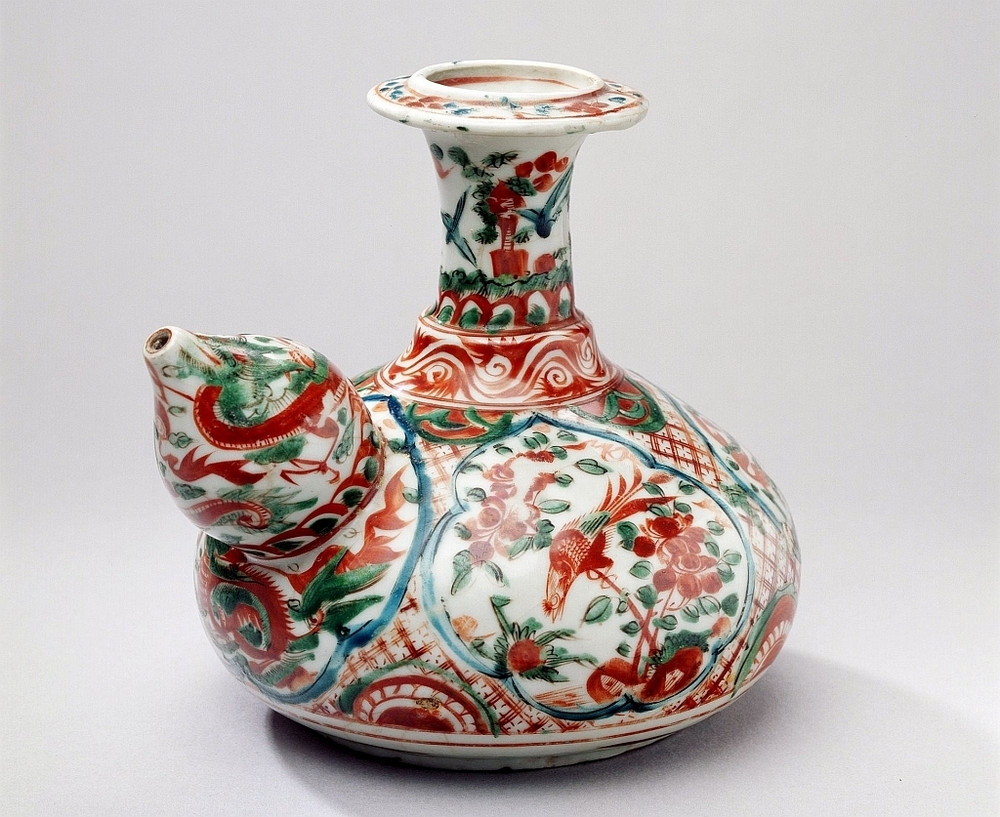
Zhangzhou kendi on footring. The wide, flattened globular body tapers into a long cylindrical neck with a wide-spreading flat mouthrim. On the shoulder a large, mammiform spout. Decorated in overglaze iron-red and green enamels with four large panels filled with blooming plants and birds, separated by a diaper pattern and semicircular red medallions. On the spout a dragon, on the neck flower sprays and birds. Kendi’s were made for export to south-east Asian markets such as Malaysia, Indonesia and The Phillippines, and were used to store water or other liquids and protect them from dust and other contaminants. Kendi’s were considered more hygenic as users could pour water directly into their mouths without having to touch the spout. They were not used in China (or Japan), and are rare in the Zhangzhou assortment. This is a splendid example, painted with much attention to detail; see, for example, the bird on the branch.
Swatow kendi on footring. The wide, flattened globular body tapers into a long cylindrical neck with a wide-spreading flat mouthrim. On the shoulder a large, mammiform spout. Decorated in overglaze iron-red and green enamels with four large panels filled with blooming plants and birds, separated by a diaper pattern and semicircular red medallions. On the spout a dragon, on the neck flower sprays and birds. Kendi’s were made for export to south-east Asian markets such as Malaysia, Indonesia and The Phillippines, and were used to store water or other liquids and protect them from dust and other contaminants. Kendi’s were considered more hygenic as users could pour water directly into their mouths without having to touch the spout. They were not used in China (or Japan), and are rare in the Swatow assortment. This is a splendid example, painted with much attention to detail; see, for example, the bird on the branch.